Client Services

Cloud Offering

Cloud Computing

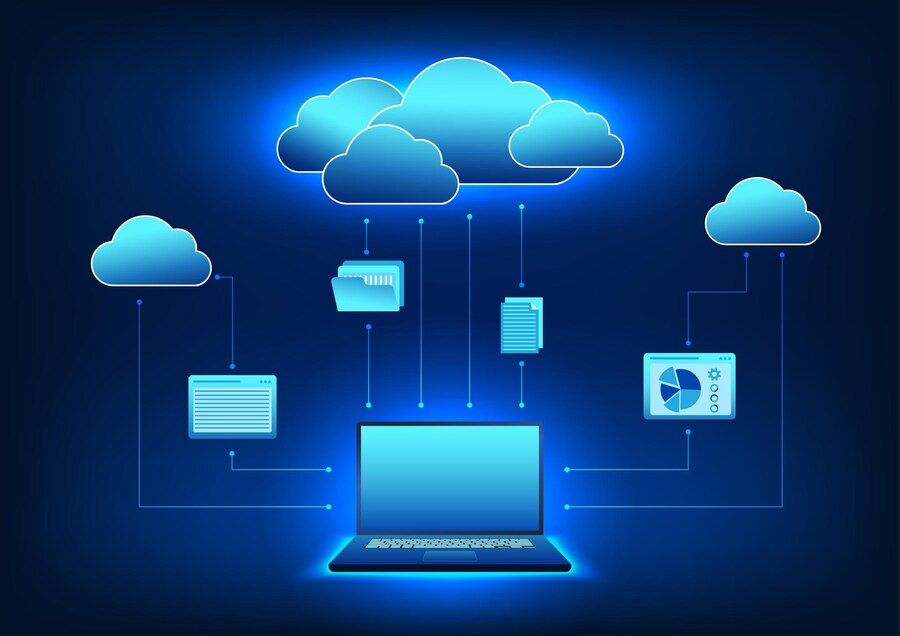
Cloud computing services offer scalability, flexibility, and cost-effectiveness by enabling on-demand access to computer resources via the internet. These services are divided into three primary categories: software as a service (SaaS), which provides software applications via the internet; platform as a service (PaaS), which offers virtualized computing resources; and infrastructure as a service (IaaS), which offers software resources. Benefits include lower IT expenses, better performance, and more teamwork. Prominent service providers such as Google Cloud Platform (GCP), Microsoft Azure, and
Amazon Web Services (AWS) ,Oracle Cloud Infrastructure (OCI), let companies to grow and develop without requiring a large amount of on-premises infrastructure.
Multi-Vendor Cloud Security Solutions

Cloud Security Architect/ Design

Securing digital assets hosted on cloud platforms is a major responsibility of a Cloud Security Architect/Design expert. To defend data, apps, and infrastructure from cyberattacks, their responsibilities include developing, putting into place, and maintaining strong security measures. They conduct risk assessments, find weaknesses in current systems, and create risk-reduction plans. Setting up encryption procedures, intrusion detection systems, and access controls specifically for cloud environments is required for this. Furthermore, in order to constantly improve security protocols, they remain current on new threats and industry best practices. They let businesses take advantage of cloud computing's full potential in a secure manner by guaranteeing the privacy, availability, and integrity of resources hosted here.

Cloud Security Tools Implementation

To protect sensitive data and infrastructure in cloud environments, cloud security tool implementation is essential. The use of strong tools such as intrusion detection systems, access management programs, and encryption protocols strengthens defenses against cyberattacks. In addition to third-party tools like Cloudflare, Palo Alto Networks, and Cisco CloudLock, platforms like AWS, Azure, and Google Cloud offer built-in security features. Timely intervention is ensured by the enhancement of threat detection and incident response capabilities through automated monitoring and alerting mechanisms. Adherence to regulatory requirements and industry standards is ensured by routine audits and compliance checks. Organizations can strengthen their defenses against changing cyber threats in the ever-changing cloud computing environment by smoothly integrating these tools.

Cloud Security Operation/Support

Updating a digital infrastructure that is both secure and resilient requires performing cloud security operations and support. Monitoring, evaluating, and reacting to security incidents and threats in cloud environments are all included in these tasks. To identify and reduce vulnerabilities, unauthorized access attempts, and malicious activity, security teams use cutting-edge tools and technologies. Constant observation guarantees proactive defenses and up-to-date threat intelligence. Support teams also help with setting up security controls, doing compliance audits, and putting security best practices into action. Preserving sensitive data and preserving faith in cloud services require close cooperation with cloud service providers and strict observance of security guidelines.

Information Security Compliance/Audit

To protect sensitive data kept in cloud environments, compliance and auditing with cloud security are essential. In order to reduce the risk of data breaches and associated legal consequences, compliance ensures adherence to regulatory standards such as GDPR, HIPAA, or PCI DSS. Audits assess security protocols, finding weaknesses and guaranteeing compliance with industry standards. Important elements include regular security assessments, access controls, and strong encryption protocols. Resilience against changing cyberthreats is strengthened by ongoing monitoring and threat detection. A client's and stakeholder's trust is increased when compliance certifications, like SOC 2 or ISO 27001, attest to adherence to strict security protocols. Sustaining a secure cloud infrastructure requires proactive steps and compliance framework adherence.

Network Security System Integrators

Network Security Design

For systems and data to be protected from cyberattacks, network security design is essential. Several layers of protection, such as firewalls, intrusion detection/prevention systems, and encryption protocols, are included in a robust design. Partitioning the network into zones with different degrees of access control is essential. Security is improved by putting strong authentication methods like multi-factor authentication into practice. Finding vulnerabilities and quickly patching them requires regular audits and updates. Furthermore, real-time threat detection and response capabilities are offered by network monitoring tools. Adherence to industry standards and cooperation with security experts guarantee a proactive approach to countering changing threats and building a robust network infrastructure.

Network Security Implementation

In order to protect computer networks from cyber threats, illegal access, and data breaches, network security implementation entails putting policies and technologies in place. Using intrusion detection systems (IDS), firewalls, and encryption techniques are some ways to safeguard data while it's being transferred. Unauthorized users are restricted from accessing systems through access control mechanisms such as role-based access control (RBAC) and multi-factor authentication (MFA). Systems are kept resistant to changing threats through routine security audits and updates. In order to reduce the possible impact of breaches, networks are segmented into smaller, easier-to-manage sections. Prompt detection and mitigation of security incidents are made possible through ongoing monitoring and response mechanisms. Preserving confidential data and ensuring business continuity require the implementation of network security with effectiveness.

Vendors Supported

We guarantee smooth integration and optimal flexibility for our clients with our platform's wide range of supported vendors. Our partnerships with top vendors in technology, manufacturing, healthcare, and other industries range from industry titans to specialized suppliers. By utilizing the newest advancements and solutions catered to your unique requirements, you can benefit from our dedication to vendor support. We have everything you need, whether you're searching for software, hardware, or services. Knowing that you have access to the best products and support available, you can navigate the constantly changing market with confidence thanks to our wide network of reliable vendors.

Managed Security Services

On-Site Consultation

For companies looking to improve efficiency, safety, or operations, on-site consultation provides tailored solutions. Specialists go to the client's location to personally evaluate their needs and difficulties. Customized advice in line with the client's objectives and available resources can be made thanks to this hands-on approach. To improve efficiency and increase output, consultants examine workflows, spot bottlenecks, and make recommendations for changes. Furthermore, safety procedures are frequently discussed during on-site consultations in order to guarantee legal compliance and reduce risks. Clients receive useful strategies to streamline their operations and achieve long-term growth through cooperative discussion and real-world insights. Proactive problem-solving is fostered by on-site consultation, enabling businesses to prosper in their respective industries.

Managed NOC & SOC

Businesses can benefit from full-service network and security management solutions provided by managed NOC (Network Operations Center) and SOC (Security Operations Center). In order to guarantee uninterrupted connectivity and minimize downtime, a Managed NOC is responsible for continuously monitoring, managing, and optimizing network infrastructure, which includes servers, routers, and switches. To protect against cyber threats like malware, phishing, and unauthorized access, a Managed SOC concurrently focuses on threat detection, incident response, and vulnerability management. They enable businesses to concentrate on their core competencies while guaranteeing the integrity and security of their digital assets. Collectively, they offer proactive network and security monitoring, quick incident response, and continuous improvement.

Vendors Supported

"Vendors Supported" describes the collection of manufacturers or suppliers that a company works with in order to obtain goods or services. From technology to manufacturing and beyond, this covers a wide range of industries. When referring to tech companies, it could mean Dell or Microsoft for hardware or software, respectively. Distributors and wholesalers who supply goods could be included in this for retailers. Supplier diversity is a reflection of supply chain management, procurement strategies, and strategic alliances of a business. Maintaining operational efficiency and satisfying customer demands require competitive pricing, timely delivery, and high-quality products, all of which are ensured by having effective vendor relationships. In order to support their operations and expansion, businesses frequently place a high priority on building strong vendor networks.

Secure OT/IoT Solutions

Multi-factor authentication

The requirement that users provide two or more verification factors in order to access an account or system is known as multi-factor authentication, or MFA, and it strengthens digital security. Usually, these variables are something the user possesses (like a smartphone or token), something they know (like a password), or something they are (biometric data). MFA greatly lowers the possibility of unwanted access because, in the event that one factor is compromised, the others stay unaffected. It increases protection levels against a range of online dangers, such as phishing, brute force attacks, and credential theft. MFA becomes an increasingly important tool for protecting private data and preserving privacy as cyberattacks become more complex.

Cloud storage with analytics

Data management is revolutionized by cloud storage with analytics, which combines storage capacity with potent analytical tools. Businesses can now store enormous volumes of data and derive useful insights from it thanks to this seamless fusion. Analytics built into cloud storage platforms sort through data, finding patterns, trends, and correlations by utilizing cutting-edge algorithms and machine learning. This facilitates targeted marketing strategies, well-informed decision-making, and operational efficiencies. Furthermore, quick reactions to changes in the market or in consumer behavior are made possible by real-time analysis. Businesses can enhance their competitiveness and spur innovation in the increasingly data-driven landscape by leveraging scalable storage options and customizable analytics.

Edge computing for data privacy

There are many advantages for data privacy with edge computing, a paradigm that processes data closer to the data source. Edge computing reduces the risk of unauthorised access and data breaches by eliminating the need to transfer sensitive data across networks to centralized servers. By using a localized strategy, privacy protections are improved and sensitive data is kept inside a secure perimeter. Edge devices can also use access controls and encryption, which strengthens data security even more. By retaining more control over their data, individuals and organizations can reduce privacy issues related to centralized processing and storage through edge computing. Sensitive information handling is made safer by this distributed architecture.

Strong encryption (TLS, AES)

Advanced Encryption Standard (AES) and Transport Layer Security (TLS) are two examples of strong encryption that protect digital communications and data from unauthorized access. Sensitive data is protected during transmission by the cryptographic protocol TLS, which guarantees secure connections over networks like the internet. Symmetric-key encryption algorithms such as AES are used in a variety of applications, such as file encryption and database security, to strengthen data while it is at rest. Through the use of intricate mathematical calculations, TLS and AES create secure channels and encrypt data with strong ciphers that prevent attempts at hacking and listening in. These strong encryption guidelines promote confidentiality and trust in online interactions by supporting the security framework of contemporary digital ecosystems.

SIEM Threat Analytics/Monitoring

An essential part of the infrastructure for contemporary cybersecurity is Security Information and Event Management (SIEM), Threat Analytics, and Monitoring. Using sophisticated algorithms, it examines enormous amounts of security data from a variety of sources, such as servers, network devices, apps, and endpoints. SIEM identifies anomalies, suspicious activity, and possible threats through real-time analysis and correlation, facilitating prompt risk mitigation. It helps with proactive threat hunting and compliance adherence by providing thorough visibility into the security posture. Organizations may quickly prioritize and handle important security incidents with the help of configurable dashboards and alerts. A crucial line of defense against constantly changing cyberthreats is provided by SIEM Threat Analytics and Monitoring.

Firmware Assessment

In order to guarantee functionality, security, and compliance, firmware assessment entails assessing the software that is embedded within hardware devices. It includes vulnerability analysis, code quality inspections, and hardware component compatibility tests. Firmware evaluation finds possible flaws and vulnerabilities that could be used by hostile actors through stringent testing techniques like static and dynamic analysis. Additionally, it authenticates and verifies the integrity of firmware updates to stop unwanted alterations. Additionally, ensuring regulatory compliance and industry standards adherence is greatly dependent on firmware assessment. Organizations can reduce risks, improve device performance, and protect themselves from cyber threats in an increasingly connected world by carrying out thorough assessments.